Interestellar
Explore the movie Interestellar through the light of the gospel and discover reflections on love, sacrifice, hope, eternity, and humanity’s search for salvation.
CINEMA
5/25/20263 min read
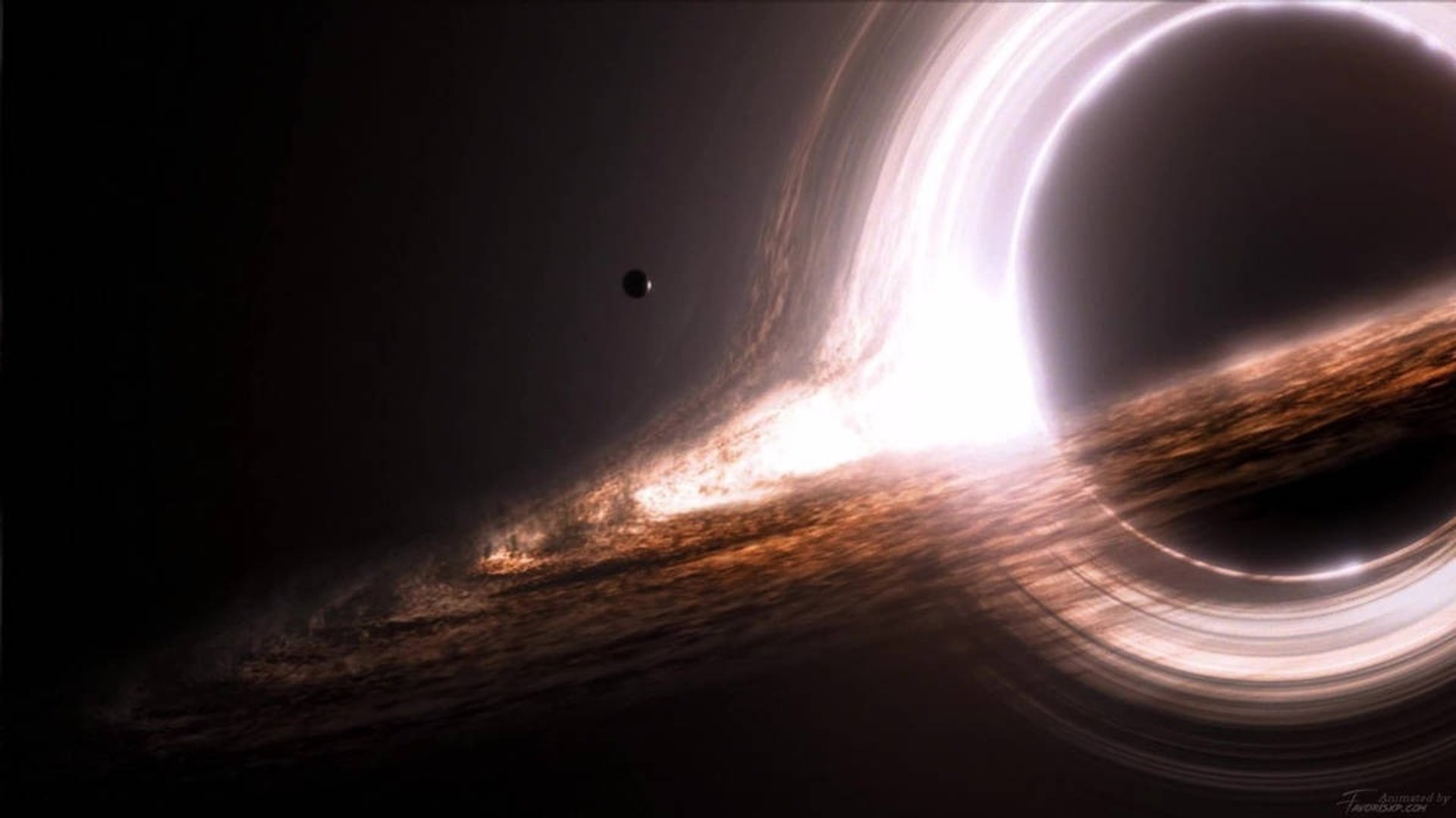
One of the most striking things about Interstellar is how it shows how small human beings are in comparison to the vastness of the universe. Space in Interstellar constantly conveys the idea that mankind is fragile, limited, and incapable of controlling everything. This reminds us of the greatness of God’s creation and of how dependent we are on Him. The immensity of the universe awakens awe, reverence, and humility.
The film explores many themes and resonates with people who enjoy science fiction, astronomy, and existential reflection. But at the center of the story there is one main theme: love. No matter how complex the plot may seem — with calculations, scientific theories, and technical conversations guiding the astronauts’ decisions as they search for a new home for humanity — it is love that moves the characters throughout the journey.
We see the love of a father for his daughter. At first, Cooper’s departure seems like abandonment, but throughout the film we come to understand that it is actually sacrificial love. Everything he does — joining the mission, crossing space, and facing the unknown — is motivated by the hope of saving her and returning to her.
We also have the character Amelia Brand, whose journey is deeply shaped by love. The possibility of finding the person she loves is incredibly powerful to her. She even says one of the film’s most memorable lines:
“Love is the one thing we’re capable of perceiving that transcends dimensions of time and space.”
Amelia is in love with Wolf Edmunds, a scientist who traveled to one of the planets in the Lazarus mission. When the crew must decide which planet to go to, she defends Edmunds’ planet not only because of the scientific data, but also because she feels an emotional connection to him.
The space in Interstellar is cold, silent, and gigantic. Yet it is precisely in this setting that the film shows that what makes humanity special is not merely intelligence or technology, but the ability to love.
And when we think about love, it is impossible not to think about God.
If we looked only through the lens of justice, none of us would deserve God’s love. We did not deserve the sacrificial work of Jesus; we deserved eternity separated from God because of sin. But God was not limited to what would merely be considered “fair” by human standards. If salvation depended on merit, all of us would be lost, because no matter how hard we try, we could never earn it on our own.
But God loved us, and that changed everything. Out of love, He accomplished His work of salvation through Jesus Christ.
Love was also guiding Cooper’s actions. In the end, he was even willing to sacrifice himself so that Amelia could survive and reach the planet where the man she loved was waiting. There is something very powerful in these characters, something driven by love: faith.
Cooper’s faith that he would see his daughter again, even after so many years, was rewarded. It seemed impossible that he could survive after entering the black hole, yet he survives and somehow manages to send the message that would save humanity through Murph. In the end, he is finally reunited with his daughter, now elderly and on her deathbed.
Amelia, also driven by love, held on to the faith that she would reach Wolf Edmunds’ planet. Even when it seemed unlikely, she succeeded. And looking back at the story, we realize that if the crew had trusted her conviction from the beginning, they might have avoided the planet that caused so many problems for the mission. Therefore, we see the faith of these characters, fueled by love, being rewarded. In the same way, the faith we place in God’s love and in the sacrificial work of Christ will also be rewarded with eternal life. Something we do not deserve and receive by grace, but for which we must grow stronger each day in faith and in love for Christ, so that we may live a life that pleases Him.
In the same way, the faith we place in God’s love and in the sacrificial work of Christ will also be rewarded with eternal life. Something we do not deserve and receive only by grace.
And honestly, having faith in the gospel is far safer than the faith Cooper and Amelia needed to have. In Interstellar, there was always the possibility of a tragic ending. A happy ending was never guaranteed. But in Christ, there is no uncertainty about how the story ends.
The ending will be joyful. It will be perfect. It will be with Christ.
Imagine living with the certainty of an eternally happy ending. That is what God’s love offers us. We simply need to place our faith in the One whom God sent, “that whoever believes in Him should not perish but have eternal life.”